American sewer roaches measure 1.5 to 2.1 inches in length and thrive in subterranean utility networks. During Maricopa County summer monsoon transitions, barometric drops and surging stormwater force these colonies…
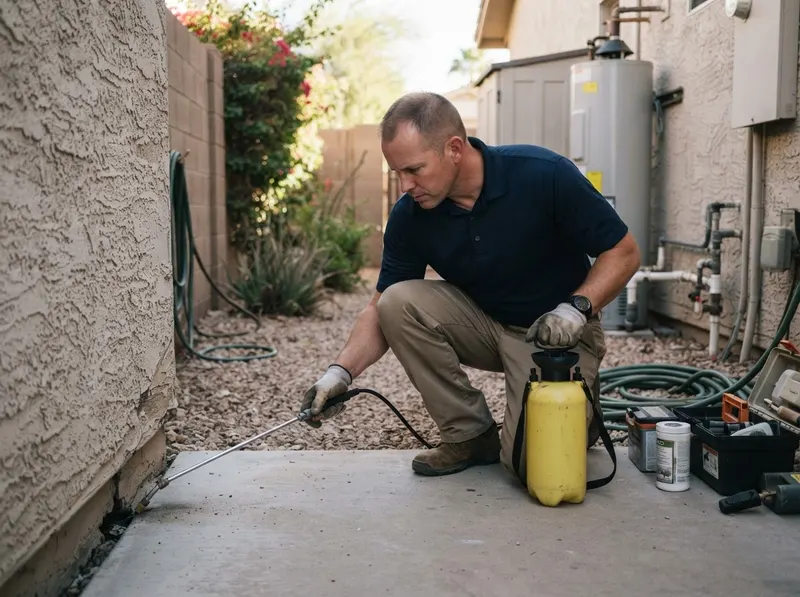
American sewer roaches measure 1.5 to 2.1 inches in length and thrive in subterranean utility networks. During Maricopa County summer monsoon transitions, barometric drops and surging stormwater force these colonies out of municipal sewer mains, municipal manholes, and storm drains. Pests surface through dry P-traps, exterior expansion joints, and ground-level plumbing entries, moving directly into residential kitchens and bathrooms. In historic neighborhoods such as Willo Historic District and Encanto Village, aged subfloor cast-iron plumbing connections and unsealed foundation stem walls frequently accelerate internal infestations. Newer developments in Desert Ridge and Ahwatukee Foothills face separate pressure from Turkestan cockroaches nesting in dry decorative river rock, artificial turf sub-bases, and automated drip-irrigation boxes adjacent to stucco weep screeds.
Eradication relies on microencapsulated exterior suspensions designed to resist degradation on concrete, flagstone, and gravel beds exposed to sustained 115-degree heat. Unencapsulated consumer pyrethroids break down within 48 to 72 hours when UV index ratings reach 10 or above. Professional protocols deploy structural residual barriers up the foundation wall, combined with non-repellent interior dust formulations behind switch plates and plumbing voids. Drain systems are cleared using high-foaming bio-sanitizing agents that break down organic scum layers inside vertical pipes, stripping roaches of breeding food sources without washing away into municipal water systems. Once cured, these compounds bond to treated surfaces to keep pets and children safe from contact absorption.
Property owners evaluating single-treatment barrier flushes versus scheduled multi-stage defense must assess exterior landscaping density and property elevation relative to city sewer infrastructure. Standalone localized flushing clears visible insects within 48 hours, but properties bordering public utility easements or dense agricultural citrus corridors in Arcadia and Biltmore Area experience recolonization within 60 to 90 days if boundary barriers are not maintained. The trade-off centers on upfront capital versus sustained perimeter maintenance: an initial targeted cleanout addresses active indoor incursions, while quarterly re-applications fortify the outer property line to intercept migrating pests before they reach domestic living spaces. Inspections confirm exact access points, pipe conditions, and perimeter yard dimensions before initiating work.
Every job gets a firm, written price after a free on-site visit.
Tell us about your desert cockroach and sewer roach elimination job in Phoenix and we'll send a clear, written quote, usually the same day.
 Blue Barrel Pest Control